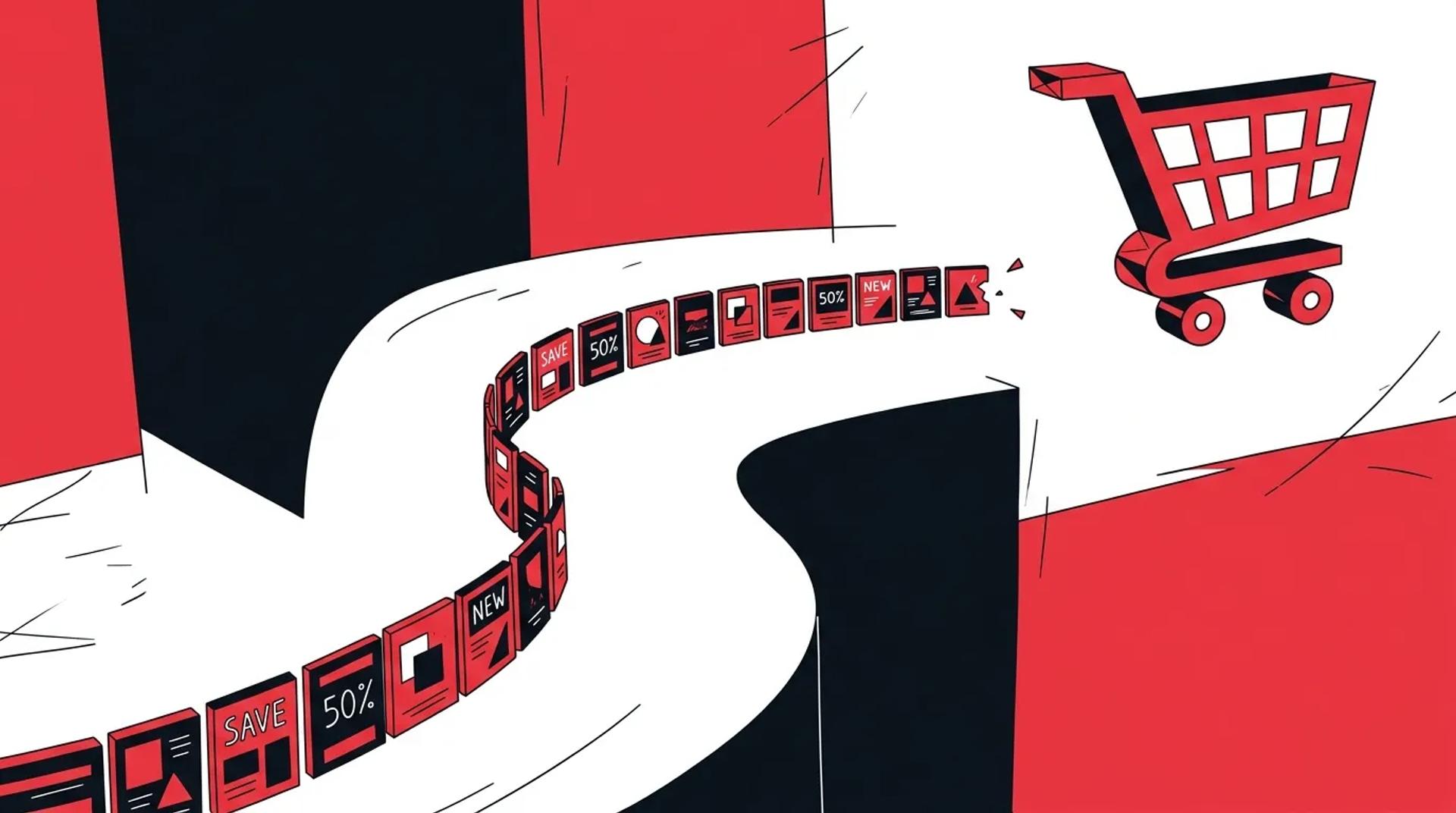
Why Most Remarketing Campaigns Stop Too Soon—and How to Fix the Strategy Before It Wastes More Budget
Most remarketing campaigns fail quietly.
They launch with good intent, produce a short burst of conversions, then flatten. Teams assume the audience is exhausted, the channel does not work, or the budget should move elsewhere. In reality, the problem is usually not remarketing itself. It is the setup.
A weak remarketing campaign strategy often relies on the same ad shown to the same users for too long, with no sequencing, no audience refresh logic, and no connection to actual buying behavior. The result is predictable: rising frequency, declining click-through rates, inflated conversion claims, and disappointing display ads ROI.
We see this constantly in paid media accounts where a business says, “Remarketing used to work.” What they usually mean is that one narrow audience segment performed for a short window, and then the campaign kept running long after its effective life.
In most lead generation and ecommerce programs, remarketing should not be a static campaign. It should be a moving system tied to funnel stage, intent signals, recency, creative rotation, and conversion path friction. When that system is missing, remarketing budgets get spent on people who either converted already, were never qualified, or simply stopped paying attention weeks ago.
If you want stronger remarketing campaign strategy, better display ads strategy, and more reliable display ads ROI, the fix is not more impressions. It is smarter audience design, tighter sequencing, and creative built for where the prospect actually is in the decision process.
Why remarketing campaigns lose effectiveness faster than most teams expect
Remarketing looks simple on the surface: show ads to people who visited your site or engaged with your brand, then bring them back to convert. That logic is sound. The problem is that many advertisers treat all returning users the same.
Google Ads documentation makes it clear that audience quality, membership duration, and campaign structure influence performance. Yet many accounts still run one or two audience lists with one generic display ad set for 30, 60, or 90 days.
That approach breaks down for three reasons:
- Intent decays quickly. Someone who visited yesterday is not equal to someone who visited 45 days ago.
- The same message gets weaker over time. A generic “come back” ad rarely stays persuasive after repeated exposure.
- Not every visitor is worth retargeting. High-intent product viewers, bounced traffic, career-page visitors, and existing customers should not be bundled together.
A common mistake we see across multi-location brands is relying on sitewide remarketing lists without segmenting by service interest, geography, or lead quality signals. In competitive local markets, this typically leads to inflated reach but lower efficiency, because budget is spread across mixed-intent users who need very different messages.
The hidden problem: remarketing often gets too much credit early, then too little scrutiny later
Remarketing campaigns can look great in platform reporting because they target warmer users. That makes them easy to defend in the first month. But once performance starts slipping, the decline is often ignored because the channel is still producing some assisted conversions.
The issue is not whether remarketing influences conversions. It usually does. The issue is whether the campaign is still doing incremental work at an efficient cost.
According to Google and broader attribution guidance from platforms like HubSpot, businesses need to evaluate not just last-click returns but true contribution across the funnel. A stale remarketing campaign can keep claiming conversions while contributing very little net lift.
What “stopping too soon” really means
The title is slightly deceptive on purpose. Many remarketing campaigns “stop too soon” not because advertisers turn them off too early, but because the strategy stops evolving too soon.
The audience goes stale.
The message stops changing.
The offer stays generic.
The exclusions lag behind reality.
And the campaign keeps serving anyway.
That is where waste starts.
The three biggest reasons remarketing budgets get wasted
1. Stale audiences
Most remarketing lists are too broad and too old.
If your campaign targets all site visitors from the last 90 days, you are combining users with dramatically different buying intent. Some are still researching. Some already chose a competitor. Some were never qualified. Some accidentally clicked. Some converted offline and were never excluded.
In most HVAC campaigns we manage, the highest-performing remarketing window is often much shorter than advertisers assume. The first 7 to 14 days after a key visit frequently drives the strongest response, especially when a user viewed a service page, pricing page, financing page, or booking flow. Extending the audience to 60 or 90 days can still be useful, but only if the message changes and the bids reflect lower intent.
Signs your audience is stale:
- Frequency keeps climbing while conversions flatten
- CTR declines steadily over time
- CPA rises despite stable spend
- View-through conversions remain high but click-through conversions weaken
- Top-performing audience is simply “all visitors” with no segmentation
2. Weak sequencing
Most brands show the same creative to all remarketing users regardless of what they did on the site.
That is not a remarketing campaign strategy. That is just repeated exposure.
Effective remarketing should follow a sequence. Someone who abandoned a form needs reassurance and friction reduction. Someone who read three educational pages may need proof and differentiation. Someone who visited a product page twice may need urgency or a direct offer.
Without sequencing, you waste impressions delivering the wrong message at the wrong stage.
3. Poor creative durability
Creative fatigue hits remarketing faster than cold traffic because the audience is smaller and frequency rises faster.
A display ads strategy built around one or two banners is almost guaranteed to burn out. Even strong offers fade if the format, headline, angle, or visual stays static for too long.
WordStream and Google Ads best practices consistently point to creative testing as a major driver of campaign efficiency. Yet many remarketing campaigns get less creative variation than prospecting campaigns, even though they often need more.
What a smarter remarketing campaign strategy actually looks like
A better setup treats remarketing as a funnel system, not a single audience bucket.
The core principle is simple: match audience recency, intent, and stage with the right message, bid, and destination.
The 5-part framework
- Segment by behavior rather than all traffic
- Prioritize recency windows based on intent decay
- Sequence messaging from reminder to proof to offer
- Refresh creative before fatigue becomes obvious
- Measure incremental efficiency instead of platform-reported volume alone
This sounds straightforward, but execution matters. Each part needs structure.
How to build audience segments that reflect real buying intent
The best remarketing audiences are not defined by “visited site.” They are defined by meaningful actions.
Here is a smarter segmentation model for most lead generation or service brands.
| Audience Segment | Behavior | Intent Level | Recommended Window | Primary Message |
|---|---|---|---|---|
| High-intent page viewers | Visited pricing, service detail, product detail, demo, financing, booking pages | High | 1–14 days | Direct response, urgency, trust signals |
| Form abandoners | Started but did not complete lead form or checkout | Very high | 1–7 days | Reduce friction, answer objections, simplify next step |
| Engaged researchers | Multiple page views, long session duration, blog-to-service path | Medium | 7–30 days | Education, case proof, differentiators |
| Repeat visitors | 2+ sessions with no conversion | Medium to high | 1–21 days | Why choose us, social proof, offer |
| Low-quality visitors | High bounce, short duration, irrelevant pages | Low | Exclude or low bid | Minimal or no investment |
| Existing customers | Purchased or became lead/customer | Varies | Exclude from sales campaigns | Cross-sell, upsell, retention only |
A common mistake we see is building lists around traffic source only, such as “all Google Ads traffic” or “all Facebook visitors.” Source can matter, but behavior matters more. A paid click from an irrelevant query is still low intent. An organic visitor who viewed financing and testimonials may be much closer to converting.
Audience segmentation questions to ask
- Which pages indicate true purchase consideration?
- Which user actions show hesitation versus commitment?
- What conversion lag is typical in this category?
- Which users should be excluded immediately?
- Do different services or locations need separate lists?
SEMrush and Ahrefs both emphasize aligning keyword and content intent with funnel stage. The same concept applies here. Intent should shape your audience architecture, not just your search campaigns.
Why recency windows matter more than most advertisers think
One of the fastest ways to improve display ads ROI is to stop treating remarketing duration as a default setting.
Membership duration should reflect the real buying cycle, not platform convenience.
For many businesses, the highest-value period is early. If a user is likely to convert, the odds are often strongest in the first few days after a high-intent visit. That does not mean longer windows are useless. It means they should be priced and messaged differently.
A practical recency model
| Recency Window | User Mindset | Recommended Bid Priority | Message Type |
|---|---|---|---|
| 0–3 days | Still actively comparing | Highest | Reminder, direct CTA, fast trust proof |
| 4–7 days | Interest present, friction increasing | High | Objection handling, testimonials, offer clarity |
| 8–14 days | Attention fading | Moderate | Differentiation, urgency, strong value proposition |
| 15–30 days | Lower active intent | Selective | Educational reinforcement, limited offer, case studies |
| 31–90 days | Often cold unless category has long sales cycle | Low or segmented | Re-engagement only if justified |
In B2B or high-consideration services, longer windows can absolutely work. But they need a more deliberate display ads strategy. The user at day 45 should not see the same ad as the user at hour 12.
A common mistake across enterprise and multi-touch funnels is assuming long sales cycle means one long remarketing audience. In practice, long buying cycles usually require more segmentation and more sequencing, not less.
How to fix weak sequencing with a full-funnel remarketing structure
Good sequencing moves the user through decision friction. It does not just repeat brand awareness.
Think of your remarketing campaign strategy in three stages:
Stage 1: Re-engage immediate intent
This is for recent high-intent visitors.
Goal: bring them back before they drift.
Effective messages include:
- Schedule your consultation
- Get a quote in minutes
- Still comparing options? See why clients choose us
- Finish your booking
Creative at this stage should be direct. Landing pages should minimize extra steps.
Stage 2: Resolve objections
This is where many campaigns fail. The user did not convert, which usually means something blocked action.
Typical friction points:
- Price uncertainty
- Trust concerns
- Lack of urgency
- Competing options
- Too much effort required to take the next step
Your ads should answer those issues.
Examples:
- Transparent pricing and financing options
- Before-and-after results or case studies
- Review ratings and guarantees
- Short-form lead options
- “Talk to a specialist” rather than “request a quote”
Stage 3: Reframe value or trigger action
If the user still has not converted, generic reminders are rarely enough.
This stage may use:
- Limited-time incentives
- Seasonal urgency
- Comparison-focused messaging
- Checklist or guide offers for complex services
- Category-specific proof content
HubSpot’s guidance on lifecycle marketing supports this principle: the message should evolve based on customer behavior and stage, not just channel placement.
A sample sequence for lead generation
- Days 1–3: Reminder ad with direct CTA back to service page or booking page
- Days 4–7: Testimonial ad or “why choose us” creative
- Days 8–14: Objection-focused creative around cost, speed, guarantees, or process
- Days 15–30: Offer, financing, consultation, or value-led educational asset
That is a real sequencing strategy. It gives users a reason to come back beyond repeated exposure.
Creative fatigue is not a design problem. It is a performance problem.
In many accounts, remarketing creative is treated as an afterthought. One responsive display ad gets loaded, maybe a few banners are adapted, and the campaign runs for months.
That is one of the biggest reasons display ads ROI declines.
Creative fatigue shows up when your audience has seen the same message too many times. On a small or medium-sized remarketing list, this can happen quickly.
What poor creative usually looks like
- Same headline across every audience segment
- No variation by funnel stage
- Brand-heavy creative with weak offer clarity
- Generic stock visuals with no differentiation
- No customer proof, no service relevance, no friction reduction
What stronger creative looks like
- Different angle by audience intent
- Specific message tied to the page or category viewed
- Clear outcome or benefit
- Visible trust markers
- Multiple visual and copy variants tested on rotation
In competitive local service markets, the best-performing remarketing creative is often less polished than brand teams expect. It tends to win because it is more specific. A message like “Same-week AC repair appointments available” often beats a broad corporate banner because it aligns with immediate user need.
A practical creative testing plan
- Build 3–4 message angles per core audience
- Create at least 2 visual directions for each angle
- Refresh underperforming assets monthly or when frequency rises and CTR falls
- Separate tests by audience stage, not just one campaign-wide asset pool
- Use landing pages that continue the same message
Google Ads best practices consistently stress asset variety in display formats. That applies even more in remarketing because exposure is concentrated.
Frequency, exclusions, and pacing: the controls that prevent overspending
You can have strong audiences and good creative and still waste budget if campaign controls are weak.
Frequency caps matter
If frequency is too low, users may not remember you. If it is too high, you become background noise or annoyance.
There is no universal cap that works for every brand, but most remarketing campaigns benefit from tighter control than advertisers use by default.
Start by evaluating:
- Frequency by campaign and audience
- CTR and conversion rate trend as frequency rises
- Recency versus impression depth
- Placement quality for display inventory
If your campaign is serving heavily into low-quality placements with rising frequency and weak click engagement, your “remarketing performance” may be mostly recycled impressions without real influence.
Exclusions are just as important as targeting
One of the easiest ways to improve display ads strategy is to tighten exclusions.
You should typically exclude:
- Recent converters from acquisition campaigns
- Support, careers, and internal traffic
- Low-intent visitors that never engaged meaningfully
- Users outside the relevant geography or service area
- Customer segments that should see different post-sale messaging
A common mistake we see across lead generation accounts is failing to exclude offline conversions quickly enough. Sales teams close leads, but the ad platform keeps targeting them because the audience logic is disconnected from CRM data.
That wastes budget and distorts reported performance.
How to measure remarketing correctly
Remarketing is one of the easiest channels to overvalue.
Because the audience is warmer, conversions naturally look better than prospecting. But better-looking conversion rates do not always mean better incremental impact.
To judge a remarketing campaign strategy accurately, look beyond top-line ROAS or CPA.
Metrics that matter
- Segment-level CPA or ROAS: which audience groups actually drive value?
- Conversion lag: how long after first visit does remarketing influence action?
- Click-through versus view-through mix: is the campaign driving active return visits?
- Frequency-to-conversion relationship: where does efficiency drop off?
- Exposed versus unexposed behavior: are conversions likely incremental?
What strong reporting should answer
- Which audience segments produce the most efficient returns?
- Which recency windows are worth aggressive bidding?
- At what impression level does performance decline?
- Which creative angles extend conversion efficiency the longest?
- Are we re-engaging actual buyers or just repeatedly touching low-value traffic?
Google Ads, HubSpot, and leading analytics platforms all reinforce a central point: attribution should guide optimization, not replace judgment. If a display campaign reports conversions but cannot demonstrate efficiency by audience, recency, and message, it is not mature enough.
What works vs. what does not in modern remarketing
| What Works | What Usually Fails |
|---|---|
| Segmenting by page intent, form behavior, and repeat visits | Targeting all visitors as one audience |
| Short recency windows with stronger bids | One 90-day list treated the same throughout |
| Sequenced messages that match hesitation points | Same ad repeated for every stage |
| Creative refreshes tied to frequency and CTR decline | Running the same banners for months |
| CRM and offline conversion exclusions | Continuing to market to converted leads |
| Landing pages aligned with ad promise | Sending every user back to the homepage |
| Evaluating incremental impact and quality | Relying only on platform-reported conversion totals |
A step-by-step remarketing rebuild for brands with underperforming campaigns
If your current setup is stale, here is the process we use to rebuild performance.
Step 1: Audit audience quality
- Pull current remarketing lists and durations
- Map each audience to actual site behavior
- Identify high-intent pages and conversion-support pages
- Flag mixed-intent and low-quality audiences for restructure
Step 2: Review conversion path friction
- Where are users dropping out?
- Which pages get return visits but low action rates?
- Does the form, offer, or landing experience create unnecessary friction?
Remarketing often underperforms because it is trying to compensate for a weak conversion path. More impressions cannot fix a bad landing experience.
Step 3: Rebuild lists by intent and recency
- Create separate lists for high-intent page viewers
- Build form abandoner and repeat-visitor audiences
- Layer recency buckets such as 1–3, 4–7, 8–14, and 15–30 days
- Set exclusions for converted users and irrelevant traffic
Step 4: Create a messaging sequence
- Immediate reminder
- Proof and trust
- Objection handling
- Offer or urgency
Each stage should have its own ad logic and landing destination where relevant.
Step 5: Refresh creative by audience, not just by brand campaign
- Use service-specific headlines
- Test trust-led vs offer-led angles
- Rotate visuals before fatigue becomes obvious
- Remove assets with weak CTR or poor downstream engagement
Step 6: Tighten measurement
- Report by audience segment
- Track recency performance
- Compare click-led and view-led outcomes
- Review frequency and placement efficiency regularly
This is the difference between a campaign that “runs” and a program that compounds.
Remarketing strategy by business type
Local service businesses
For contractors, medical practices, home services, legal firms, and similar categories, buying urgency can be high and recency matters a lot.
What often works best:
- Short windows for service-page visitors
- Location-specific messaging
- Trust markers like ratings, response speed, guarantees, years in business
- Simple conversion paths such as call, book, or request estimate
What often fails:
- Long generic display campaigns
- Broad awareness creative with no service relevance
- Retargeting all blog readers the same as quote-page visitors
B2B lead generation
B2B requires more patience, but also more precision.
What often works best:
- Company or solution-page visitor segmentation
- Longer sequencing based on content engagement
- Case studies, ROI proof, buyer enablement assets
- Audience split by persona or product category where possible
What often fails:
- One “book a demo” message to everyone
- No distinction between early research and late-stage evaluation
- No alignment between paid media and sales cycle realities
Ecommerce and retail
Ecommerce remarketing is often more advanced, but still vulnerable to fatigue.
What often works best:
- Cart and product-view segmentation
- Dynamic product ads where catalog quality is strong
- Promotion pacing tied to recency and margin goals
- Cross-sell and post-purchase exclusions
What often fails:
- Always-on discounting
- Showing the same product endlessly after purchase
- Ignoring category-level buying windows
Common myths that keep remarketing mediocre
“If people did not convert the first time, just keep reminding them”
Reminders help, but repetition alone is not strategy. If users are not converting, there is usually unresolved friction.
“A bigger audience is always better”
Not if quality drops faster than scale helps. Bigger low-intent lists can reduce efficiency and dilute learning.
“Display ads ROI is low because display does not convert”
Often the issue is poor segmentation, weak creative, and lazy measurement—not the channel itself.
“Remarketing does not need much maintenance”
It absolutely does. Because the audience is smaller and warmer, performance shifts faster. That means creative fatigue, exclusions, and frequency need regular review.
FAQ
How long should a remarketing campaign run?
A remarketing campaign should run as long as it is structured around audience recency, stage-specific messaging, and active exclusions. The better question is not how long the campaign runs, but how long each audience segment stays valuable. For many high-intent segments, the strongest performance happens in the first 7 to 14 days.
What is the ideal audience duration for remarketing?
There is no single ideal duration. High-intent visitors often perform best in short windows like 1 to 7 days or 1 to 14 days. Longer windows can work for B2B or high-consideration purchases, but they usually need different offers, lower bids, and separate creative.
Why does display ads ROI drop over time?
Display ads ROI usually drops because audiences go stale, frequency rises, creative gets ignored, or converted users are not excluded quickly enough. In many accounts, the issue is not display traffic itself. It is that the campaign keeps serving long after the original logic stops being effective.
How often should remarketing creative be refreshed?
Refresh cadence depends on audience size, spend, and frequency, but many remarketing campaigns need creative review every 2 to 4 weeks. If CTR declines, frequency rises, and conversion rates soften, you likely need new assets or a different message angle.
Should remarketing campaigns send traffic back to the homepage?
Usually no. The landing page should match the user’s prior intent and the ad message. High-intent users should return to a relevant service, product, quote, or booking page. Homepages often add friction and reduce conversion efficiency.
What is the biggest mistake in a remarketing campaign strategy?
The biggest mistake is treating all visitors the same. When advertisers combine different intent levels, use one message, and ignore recency, the campaign quickly loses efficiency and starts wasting spend.
Remarketing should be a system, not an afterthought
Most underperforming remarketing is not failing because the audience is too small or the channel is weak. It is failing because the strategy stopped at “show ads to previous visitors.”
A stronger remarketing campaign strategy recognizes three realities:
- Intent changes over time
- Different users need different messages
- Creative and exclusions determine whether spend compounds or leaks
If your campaigns are built around stale audiences, weak sequencing, and static creative, the budget is probably being spent long after the highest-value window has passed.
The fix is not complicated, but it does require discipline: better segmentation, shorter and smarter recency windows, staged messaging, creative refreshes, and more honest measurement of display ads ROI.
That is how display ads strategy becomes accountable. And that is how remarketing stops being a passive line item and starts becoming a real mid-funnel growth lever.
Talk to a Paid Search Strategist
If your remarketing campaigns are still built on broad lists, repeated banners, and inflated attribution, there is likely more waste in the account than you think.
We help brands rebuild remarketing around audience quality, sequence logic, conversion friction, and measurable display ads ROI—so budget is spent where it can actually influence pipeline and revenue.
Talk to a Paid Search Strategist if you want a sharper remarketing campaign strategy, a stronger full-funnel acquisition program, and a clearer path from paid traffic to qualified leads.
References
- Google Ads documentation – Audience segmentation, remarketing lists, responsive display ads, and conversion measurement
- Google Search Central – Search intent, site experience, and content quality principles relevant to conversion journeys
- HubSpot – Lifecycle marketing, attribution, lead nurturing, and funnel-based messaging
- SEMrush – Search intent frameworks, audience strategy, and competitive content analysis
- Ahrefs – Intent mapping, visitor behavior insights, and content-to-conversion strategy
- WordStream – Display advertising performance trends, creative testing, and Google Ads optimization practices
- McKinsey – Consumer decision journey research and non-linear buying behavior
- Deloitte – Digital consumer behavior trends and modern path-to-purchase dynamics