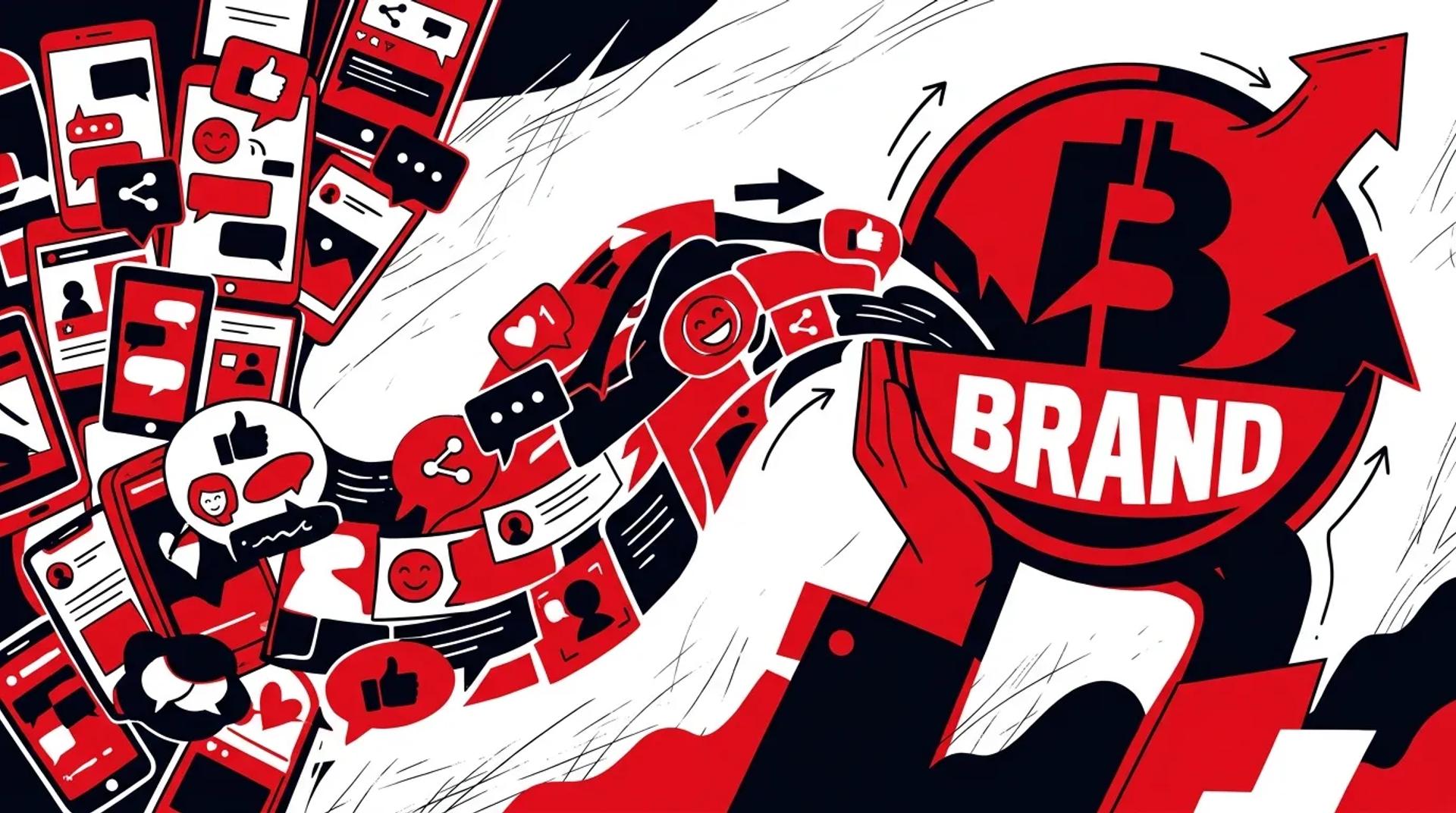

Your brand’s social creative is either building trust and generating pipeline or just filling a feed. Most brands are doing the latter. They produce content because they feel they should be on social media, not because they have a clear social creative strategy that connects creative output to business outcomes.
The difference between a brand that posts and a brand that converts is not budget or production quality. It is strategic intent. Every piece of content should exist for a specific reason, target a specific audience segment, and be measured against a specific outcome. When that structure is in place, content stops being a cost center and starts being a revenue driver.
We build social creative programs for brands that need their content to perform, not just exist. Here is what the strategic version looks like.
What social content and creative should actually accomplish
A social creative strategy serves four business functions. Most brands execute on one or two. The ones that execute on all four are the ones that outgrow their competitors.
Function 1: Stop the scroll and earn attention
Before your content can do anything useful, someone has to see it. The first frame of an image, the first line of copy, and the first second of video determine whether your content gets consumed or ignored. This is the hook, and it is where most creative fails.
High-performing social creative earns attention by leading with a pattern interrupt. Something unexpected, provocative, or directly relevant to the viewer’s pain point. Not a logo. Not a stock photo. Not a generic statement.
Function 2: Build trust through proof
Attention without trust produces nothing. Once you have the viewer’s attention, the content needs to build credibility. Case studies, process walkthroughs, customer testimonials, and expert insights all serve this function.
The best trust-building content is specific. “We increased pipeline by 40% in 90 days for a home services brand in Phoenix” is infinitely more powerful than “We help businesses grow.”
Function 3: Move prospects through the funnel
Not all content should ask for the sale. But all content should move the prospect one step closer to buying. Awareness content introduces the problem. Consideration content positions your solution. Decision content drives action.
Function 4: Generate measurable pipeline
At the bottom of the funnel, content should produce leads, calls, and bookings. This is where most brands either push too hard (every post is a sales pitch) or not at all (no CTAs ever).
| Function | Content Types | Business Metric |
|---|---|---|
| Earn attention | Hooks, Reels, trending formats | Reach, new audience growth |
| Build trust | Case studies, testimonials, process content | Saves, shares, time spent |
| Move through funnel | Educational series, comparison content | Website visits, DM conversations |
| Generate pipeline | Offer posts, direct CTAs, booking prompts | Leads, calls, revenue attributed |
Building a social content engine
A social content engine is the operational system that turns strategic intent into consistent, measurable content output. It is not a content calendar (though it includes one). It is the entire production, distribution, and optimization pipeline.
Component 1: content pillars
Define 3-5 content pillars tied to business priorities. Every piece of content falls into one pillar. Every pillar has defined success metrics.
Example for a professional services brand:
| Pillar | Purpose | Content Examples | Success Metric |
|---|---|---|---|
| Expertise | Demonstrate knowledge | How-to posts, industry insights | Saves, shares |
| Proof | Build credibility | Case studies, testimonials, results | Website visits, DM inquiries |
| Process | Reduce buyer friction | What to expect, FAQs, behind-the-scenes | Time on page, form fills |
| Culture | Humanize the brand | Team spotlights, values in action | Follower quality, engagement rate |
| Community | Build local authority | Partnerships, local involvement, UGC | Brand mentions, tagged content |
Component 2: production workflow
Systematize your content production so quality is consistent and timelines are predictable:
- Monthly planning session (2 hours): Review last month’s performance, set next month’s content calendar, assign production tasks
- Weekly production (varies): Film, design, write, and edit content for the upcoming week
- Daily publishing and engagement (1-2 hours): Publish scheduled content, respond to comments, engage with relevant accounts
- Weekly performance check (30 minutes): Identify over/underperforming content, adjust the calendar if needed
Component 3: repurposing system
Every source asset should produce 5-8 derivative pieces:
- One 5-minute video becomes 4-5 Reels, a carousel summary, 2-3 quote graphics, and a blog post outline
- One blog post becomes a carousel, a LinkedIn text post, 3-4 static graphics, and a Stories series
- One photoshoot becomes 20-30 individual assets across formats and platforms
This multiplier is what makes a social content engine efficient. You are not creating 30 pieces from scratch each month. You are creating 5-8 high-quality source assets and distributing them strategically.
Component 4: testing and iteration
Without testing, your creative strategy is based on assumptions. Build systematic testing into every month:
What to test:
- Hooks (different opening lines, first frames, or questions)
- Formats (carousel vs. Reel vs. static for the same message)
- Angles (emotional vs. logical vs. social proof approaches)
- CTAs (soft vs. direct, different placements)
How to test:
- Change one variable at a time
- Run each test for a minimum of 7 days
- Measure on business metrics (not just likes)
- Document every test result in a shared learnings database
After 90 days of consistent testing, you will have a data-backed playbook for exactly what works for your brand. That is worth more than any creative trend or best practice article.
What high-performing social creative looks like
High-performing social creative shares these traits regardless of industry, platform, or format:
It looks native
Content that looks like an ad gets treated like an ad. People scroll past it. The best-performing creative feels like something a friend or expert shared, not something a brand paid to put in your feed.
This does not mean low quality. It means production choices that match platform norms. On TikTok, that means selfie-style video. On Instagram, that means clean but not overly corporate design. On LinkedIn, that means text-forward posts from real people.
It leads with value
Before asking for anything, give the viewer something useful. An insight they had not considered. A tip they can apply immediately. A perspective that challenges their current thinking. Value-first creative earns the right to include a CTA.
It has one job
A single piece of content should accomplish one thing. Not introduce your brand AND share a case study AND promote a sale AND ask for a follow. Pick one objective per post and execute it clearly.
It is built for mobile
70-80% of social content is consumed on mobile devices. If your text is too small, your videos are horizontal, or your landing pages are not mobile-optimized, you are losing the majority of your audience.
Where most creative strategies fall apart
No connection between creative and revenue
If your creative team cannot trace a line from content production to pipeline, the program will always be vulnerable to budget cuts. Connect every content piece to a measurement framework from day one.
Aesthetic over function
The portfolio-worthy carousel that generates zero clicks is not good creative. It is good art. Those are different things. Social creative strategy balances visual quality with functional performance.
Content silos between organic and paid
Organic content is a free testing ground for paid creative. When these teams operate in silos, you are paying to learn things you could have learned for free. Build a bridge between organic performance data and paid creative development.
No documented brand voice
When three different people create content with no voice guidelines, the brand sounds inconsistent. Inconsistency erodes trust. Document your brand voice with examples, approved language, and tone guidelines for different scenarios.
Frequently asked questions
How much should we invest in social content production?
A reasonable starting budget for a mid-size brand is $3,000-8,000 per month for strategy, production, and distribution (excluding paid media spend). This covers 12-18 source assets repurposed into 40-60 total pieces. Scale investment based on proven ROI, not arbitrary benchmarks.
Should we hire a freelancer, build a team, or use an agency?
For most growth-focused brands, an agency provides the strategic depth, creative range, and measurement infrastructure that a single hire cannot. Supplement with a freelance specialist (videographer, photographer) for content that requires on-site production.
How do we balance brand building with performance content?
Use the 40/30/20/10 split: 40% awareness and trust content, 30% consideration content, 20% conversion content, 10% retention and community content. This keeps your feed valuable while maintaining consistent conversion opportunities.
What is the fastest way to improve social creative performance?
Fix your hooks. Test 3-4 different opening frames or lines for the same content. The hook determines whether 100 people or 10,000 people see the rest of your message. No other single variable has that much impact on performance.
Turn creative into a revenue channel
A social creative strategy that connects production to pipeline is not a luxury for big brands. It is a requirement for any brand that wants to grow through social media. The framework above gives you the pillars, the workflow, and the measurement system to make it happen.
References
- HubSpot, “The State of Social Media Content Marketing”
- Meta, “Creative Performance Optimization and Testing Guide”
- Sprout Social, “Social Media Content Strategy Framework”