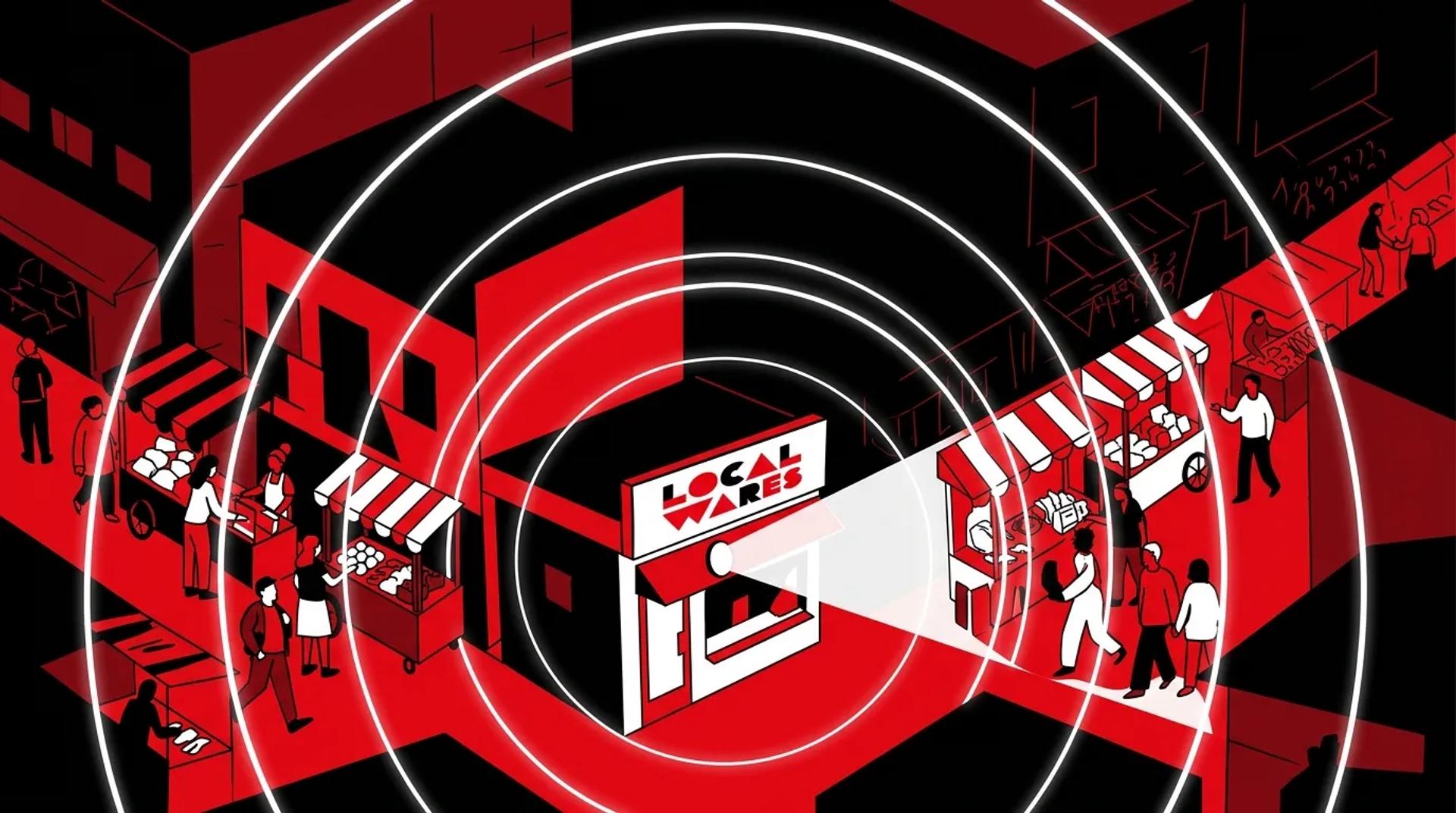
Most local businesses think about marketing in campaigns. Run ads this month. Send mailers next month. Try SEO for a quarter and see what happens. Each tactic starts from scratch, produces a burst of results, and then fades. The business that wins in any given market is the one that treats visibility as a system, not a series of experiments.
Local market dominance is not about ranking first for one keyword or having the most reviews on one platform. It is the compounding effect of being consistently visible across every surface where your customers search, compare, and decide. Google Maps. Organic search. Directories. Review sites. Social proof. Branded search volume. When these signals reinforce each other over time, your cost to acquire a customer drops and your competitors have to spend more to keep up.
We manage local visibility for home service brands across dozens of markets. The difference between the companies that plateau and the companies that compound is always the same: the compounders aligned their signals and maintained consistency. The others chased tactics.
Why compounding visibility matters more than one-off wins
Paid ads stop the moment you stop paying
Google Ads and LSAs are effective demand capture tools. But they are rented visibility. The day you stop spending, the leads stop. There is no residual value. Every dollar spent on paid search produces a transaction, not an asset.
Organic visibility, review authority, and listing accuracy are assets. They appreciate over time. A strong Google Business Profile, a consistent review generation system, and accurate directory listings continue producing leads months and years after the initial investment.
Compounding visibility lowers your blended cost per lead
When organic search, maps, and branded demand generate a significant share of your leads, your blended cost per lead drops. You can then afford to bid more aggressively on paid channels because your overall acquisition economics are healthier.
Here is how that math works over 12 months:
| Month | Paid Leads | Organic/Maps Leads | Total Leads | Blended CPL |
|---|---|---|---|---|
| Month 1 | 120 | 20 | 140 | $78 |
| Month 6 | 130 | 55 | 185 | $54 |
| Month 12 | 125 | 95 | 220 | $41 |
Paid spend stayed roughly flat. Organic and maps leads grew because the foundational signals got stronger. Blended CPL dropped by almost half. That is the compounding effect.
Your competitors cannot easily replicate it
Compounding visibility takes time. That is the downside and the advantage. A competitor can copy your ad strategy in a week. They cannot replicate 200 five-star reviews, three years of consistent content, and a fully optimized listing ecosystem overnight. The longer you invest in these signals, the wider the gap.
Which signals build market-level presence
Google Business Profile optimization
Your GBP is the foundation of local visibility. It influences Maps rankings, Local Pack placement, and how customers perceive your business before they ever visit your website.
Key signals that compound:
- Complete and accurate profile. Every field filled. Services, hours, service area, attributes.
- Consistent review volume. Not just a high count. A steady, ongoing stream of recent reviews.
- Review response rate. Responding to every review (positive and negative) signals engagement.
- Photos and updates. Regular posts and fresh photos tell Google the listing is active.
- Category accuracy. Primary and secondary categories that match what you actually do.
Review authority across platforms
Google is not the only platform customers check. Yelp, BBB, Angi, Nextdoor, and Facebook all influence the decision. A local authority strategy treats reviews as a cross-platform asset.
What we prioritize:
- Google reviews for Maps and search visibility.
- Yelp reviews for customers who cross-reference.
- Facebook recommendations for social proof.
- BBB accreditation and rating for trust signals.
The goal is not to game any platform. It is to build a consistent presence everywhere customers look so that no matter where they search, your business shows up with strong proof.
Directory and citation consistency
Directories are not glamorous. But inconsistent business information across directories (wrong phone number, old address, mismatched business name) sends conflicting signals to search engines and confuses customers.
A clean citation profile means:
- Same business name, address, and phone (NAP) everywhere.
- Active listings on the top 40 to 50 directories that matter in your market.
- Regular audits to catch and correct errors from data aggregators.
Branded search demand
When customers search for your business by name, that is branded search. It is the strongest intent signal in local marketing. High branded search volume tells Google your business is a known, trusted entity in the market.
Branded search grows from:
- Strong review presence (people search your name after seeing reviews)
- Yard signs, vehicle wraps, and physical branding
- Repeat customer recognition
- Community involvement and sponsorships
- Consistent paid and organic visibility over time
How to prioritize improvements by market
Audit your current position
Before investing, understand where you stand. A local visibility audit should cover:
- GBP health. Completeness, category accuracy, review count and velocity, photo volume.
- Review comparison. Your review count and rating vs. the top 3 competitors in your market.
- Citation accuracy. NAP consistency across top directories.
- Organic rankings. Position for core service keywords in your market.
- Branded search volume. Monthly branded search trend for your business name.
Use this prioritization framework
| Signal | Impact on Visibility | Effort to Improve | Priority |
|---|---|---|---|
| GBP optimization | High | Low | Start here |
| Review generation system | High | Medium | Implement immediately |
| Citation cleanup | Medium | Low | Fix within 30 days |
| Content for organic rankings | High | High | Ongoing investment |
| Branded search growth | High | High | Long-term strategy |
Start with the high-impact, low-effort items. GBP optimization and citation cleanup produce results quickly and set the foundation for everything else.
What growth should look like over time
Months 1-3: foundation work
- GBP fully optimized
- Review generation system active (target: 8 to 15 new reviews per month)
- Citation errors corrected
- Baseline metrics documented
Expect modest improvements in Maps visibility and a noticeable uptick in review volume.
Months 4-6: momentum builds
- Review count surpasses closest competitor (or closes the gap significantly)
- Organic rankings start improving for mid-tail service keywords
- GBP insights show increasing views, clicks, and direction requests
- Branded search volume begins trending upward
Months 7-12: compounding kicks in
- Maps visibility strengthens across more service area keywords
- Organic traffic grows as content and authority build
- Blended CPL drops as organic and maps leads increase
- Branded search becomes a meaningful lead source
- Competitors notice and start reacting, but the gap is already established
Beyond 12 months: dominance
At this stage, your listing ecosystem, review authority, and organic presence work together to make your business the default choice in the market. New competitors entering the space face a significant uphill climb. Your marketing dollars go further because the compounding asset base does much of the heavy lifting.
Common mistakes that stall compounding
- Inconsistent review generation. A burst of 30 reviews followed by three months of silence looks unnatural and stalls momentum.
- Ignoring directory accuracy. One wrong phone number on a major directory can fragment your citation profile.
- Treating SEO as separate from local. Local SEO and traditional SEO overlap. Service pages, location pages, and content all feed local visibility.
- No measurement cadence. If you are not tracking GBP metrics, review velocity, and organic traffic monthly, you cannot tell if the system is working.
- Chasing shortcuts. Fake reviews, keyword-stuffed business names, and black-hat tactics produce short-term gains and long-term penalties.
How Ad Leverage uses LocalLegend to build local momentum
At Ad Leverage, we use LocalLegend to systematize the compounding process. Instead of running one-off local campaigns, we build a local authority strategy that aligns every signal (listings, reviews, content, directories, and branded demand) into a system that strengthens over time.
What that looks like in practice:
- GBP management. Full optimization, regular posts, review response, and ongoing monitoring for accuracy and competitor changes.
- Review generation. Automated review request workflows tied to completed jobs in your CRM. Consistent volume across Google, Yelp, and Facebook.
- Citation management. Automated distribution and monitoring across 50+ directories with quarterly accuracy audits.
- Visibility reporting. Monthly tracking of Maps rankings, organic traffic, review metrics, and branded search trends so you can see the compounding effect in real numbers.
Local market dominance is not something you buy. It is something you build. The businesses that invest in it now create an advantage that gets harder for competitors to close every month.
Frequently asked questions
How long does it take to see results from a local visibility strategy?
Most businesses see measurable improvement in Maps visibility and review authority within 60 to 90 days. Significant organic ranking improvements typically take 4 to 6 months. True compounding effects (where organic and maps leads meaningfully reduce blended CPL) usually appear after 6 to 12 months of consistent execution.
Is this the same as SEO?
Local visibility includes SEO but goes beyond it. It also covers Google Business Profile optimization, review management, directory accuracy, and branded search growth. These signals work together. Focusing on only one limits the compounding effect.
How many reviews do we need to compete?
It depends on your market. Audit the top 3 competitors in your primary service area. If the leader has 400 reviews and you have 50, you need a sustained review generation system running for several months to close the gap. The velocity (reviews per month) matters as much as the total count.
Can we do this ourselves or do we need an agency?
You can do the foundational work (GBP optimization, citation cleanup, manual review requests) internally. The compounding effect comes from consistency and scale. Automated review generation, directory monitoring, ongoing content, and cross-platform tracking are where most businesses benefit from a system and a team that manages it.
Book a strategy call
If your competitors are showing up in Maps, ranking in organic search, and generating branded demand while you are relying primarily on paid ads, the gap is going to widen.
We will audit your current local visibility across maps, reviews, and directories, identify the highest-leverage improvements, and build a plan that compounds your market presence over time.
Book a Strategy Call to start building visibility that your competitors cannot easily replicate.
References
- Google Business Profile Help - Optimization guidelines and ranking factor documentation
- BrightLocal - Local consumer review survey and citation accuracy research
- SEMrush - Local SEO ranking factors and competitive visibility analysis