
We see this constantly. A brand does a social media shoot, produces 20 pieces of content, posts them over two weeks, and then the content well runs dry. Next month, same thing. Endless production cycles with zero strategic planning behind them. It is expensive, exhausting, and completely avoidable.
Proper social media shoot planning means one production day should cover 4-6 weeks of content across every platform. Not just Instagram. Not just TikTok. Every social platform plus paid ads, website content, email, and sales enablement.
The difference between a team that shoots every week and a team that shoots monthly is not budget. It is planning. This guide covers the exact system we use to make every social shoot produce content that actually gets deployed.
Start with content pillars, not post ideas
The biggest planning mistake is starting with individual post ideas. “Let’s shoot a product demo and a talking head and a behind-the-scenes.” Those are formats, not strategy. A good content shoot strategy starts with content pillars.
What are content pillars?
Content pillars are the 3-5 core themes your brand needs to communicate. Everything you produce should ladder up to one of these pillars.
Example pillars for a B2B service company:
- Authority: Industry insights, expert takes, trend analysis
- Social proof: Customer results, testimonials, case studies
- Product education: How it works, feature spotlights, comparisons
- Culture: Team, values, behind-the-scenes, hiring
- Promotion: Offers, events, launches, seasonal pushes
Map pillars to the shoot:
Each pillar should have 3-5 content concepts planned for each shoot. That gives you 15-25 concepts per shoot day. Each concept produces 2-4 finished pieces across formats (Reels, carousels, Stories, static posts). That is 30-100 pieces of content from one day.
The platform-first shot list
Different platforms reward different content styles. Plan your shot list to produce native content for each platform, not one-size-fits-all content that gets cross-posted everywhere.
| Platform | Best Performing Format | Optimal Length | Capture Notes |
|---|---|---|---|
| Instagram Reels | Fast-paced, text overlay, trending audio | 15-30s | Vertical, hook in 1s |
| TikTok | Raw, personality-driven, trend-aware | 15-60s | Less polished, more authentic |
| Educational, thought leadership, B2B stories | 30-90s | Professional but not corporate | |
| YouTube Shorts | Informational, how-to, quick tips | 30-60s | Value-dense, clean presentation |
| Longer narrative, community content | 60-180s | Captions essential, sound-off | |
| Stories | Quick polls, BTS, day-in-the-life | 5-15s clips | Casual, in-the-moment feel |
Capture for format differences:
Do not shoot one video and post it everywhere. Capture the same concept with different energy levels and pacing for different platforms:
- TikTok version: Casual delivery, natural setting, raw audio
- LinkedIn version: Structured delivery, clean background, professional tone
- Reels version: Fast cuts, text overlays, trending audio-friendly
- Stories version: Behind-the-scenes of capturing the main content
This takes an extra 10-15 minutes per concept and produces 4 platform-native pieces instead of 1 repurposed clip.
Batch production for efficiency
The most efficient social media shoot planning batches content capture by setup, not by platform or posting date.
Sample shoot day schedule (8 hours):
| Time | Activity | Output |
|---|---|---|
| 8:00-9:30 | Setup 1: Talking head (3 topics, 3 energy levels) | 9 raw takes |
| 9:30-11:00 | Setup 2: Product demos (4 products or features) | 8-12 raw takes |
| 11:00-12:00 | Setup 3: Customer testimonial (2 customers) | 4-6 raw takes |
| 12:00-1:00 | Lunch + BTS content capture | 5-10 casual clips |
| 1:00-2:30 | Setup 4: Lifestyle/in-context shots (3 scenarios) | 9-12 raw takes |
| 2:30-3:30 | Setup 5: Q&A / FAQ responses (5 questions) | 5-10 raw takes |
| 3:30-4:30 | Setup 6: Trend-specific content (3 current trends) | 6-9 raw takes |
| 4:30-5:00 | Pickup shots, B-roll, photo stills | 20-30 images + clips |
Total raw output: 65-100 raw takes + 20-30 images. After editing and versioning: 50-80 finished assets.
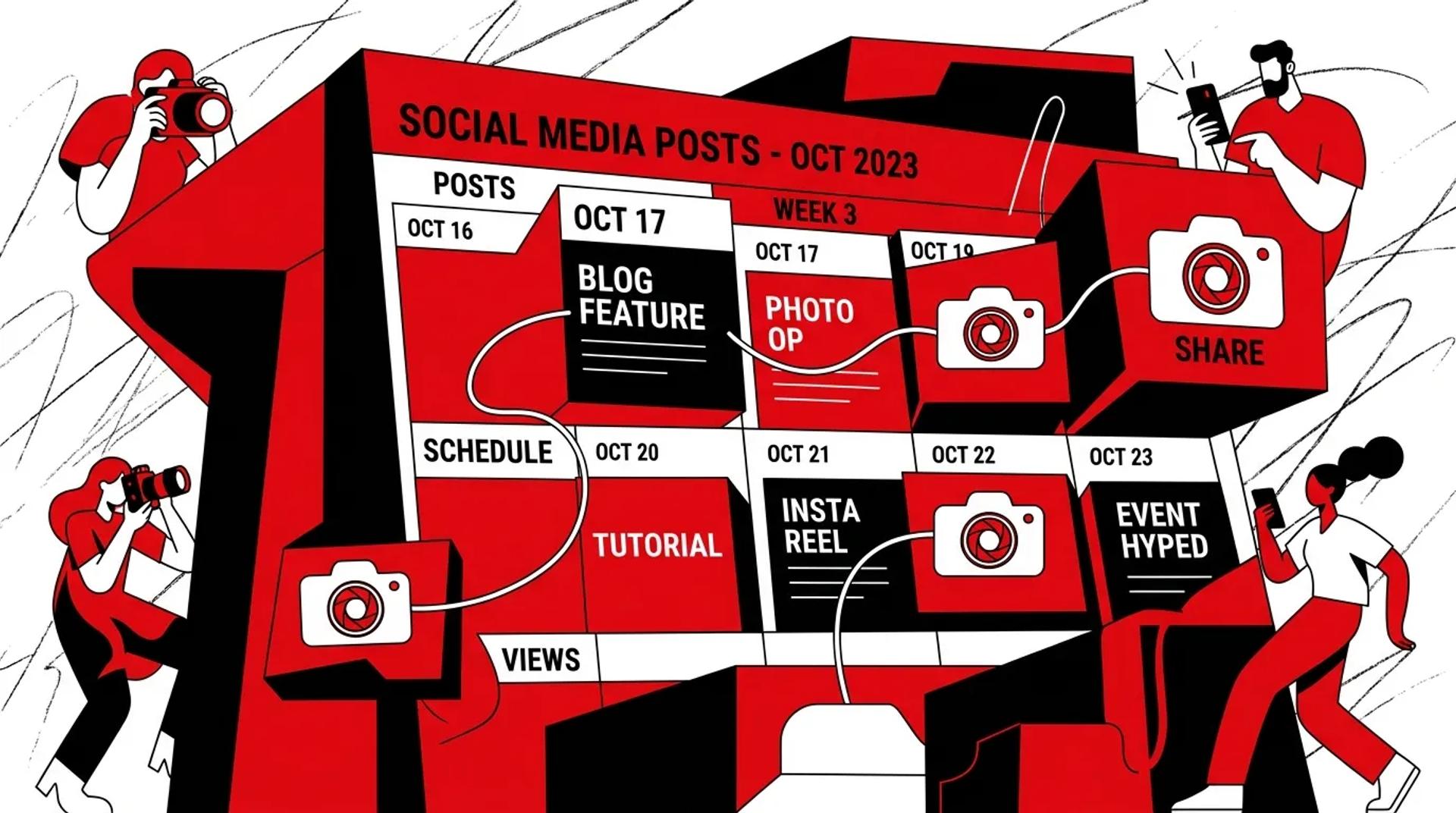
Build the content calendar before the shoot
Most teams shoot first and plan the calendar later. Reverse this.
Pre-shoot calendar template:
Map out your posting schedule for the 4-6 weeks following the shoot. For each post, define:
- Date and time: When it goes live
- Platform: Where it posts
- Pillar: Which content pillar it serves
- Concept: What the content is about
- Format: Reel, carousel, static, Story
- Status: To capture, captured, in edit, ready, scheduled, live
When the calendar is built first, your shot list is automatically aligned to real deployment needs. Nothing gets shot “just in case.” Everything has a destination.
Cross-channel deployment strategy
Social media video production assets should not stay on social. Here is how to extend each piece:
- Top-performing organic posts become paid ad creative. Wait for organic data before promoting.
- Testimonial clips get added to your website’s testimonials page and sales deck.
- Product demos become landing page videos and email content.
- FAQ responses feed your website’s FAQ section and customer support resources.
- Behind-the-scenes content humanizes email newsletters and about pages.
When your shoot feeds 5+ channels, your cost per usable asset drops dramatically and your brand stays consistent across every touchpoint.
Frequently asked questions
How often should I schedule social media shoots?
Most brands need monthly shoots to maintain fresh content across platforms. High-volume accounts (posting 5-7 times per week across multiple platforms) may need bi-weekly sessions. The goal is to always have 4-6 weeks of content in reserve so you are never scrambling to create content last-minute.
What equipment do I need for a professional social media shoot?
At minimum: a modern smartphone or mirrorless camera, a ring light or LED panel, a wireless microphone, and a clean backdrop. For a more polished setup, add a second camera for B-roll, a teleprompter, and a small lighting kit. The planning matters more than the gear.
How do I balance trend content with evergreen content?
We recommend an 80/20 split. 80% evergreen content (product education, testimonials, FAQs, culture) that stays relevant for months. 20% trend content (platform-specific trends, timely takes, seasonal hooks) that captures short-term reach. Capture both at every shoot.
What if I do not have a team to handle editing and posting?
Build editing into the shoot budget. Your social media shoot planning should include a post-production timeline with clear handoffs. If you do not have in-house editing, hire a freelance editor or work with a production partner who handles end-to-end delivery. Unedited footage is not content.
Plan your next shoot for 6 weeks of content
If your social shoots are producing a week of content at best, the problem is in the planning. Talk to a Social Content Producer at Ad Leverage and we will build a production plan that keeps every platform fed for weeks.
References
- Sprout Social: Social Media Content Benchmarks and Planning Data
- HubSpot: Social Media Content Calendar Templates and Best Practices
- Later: Instagram and TikTok Content Strategy Research