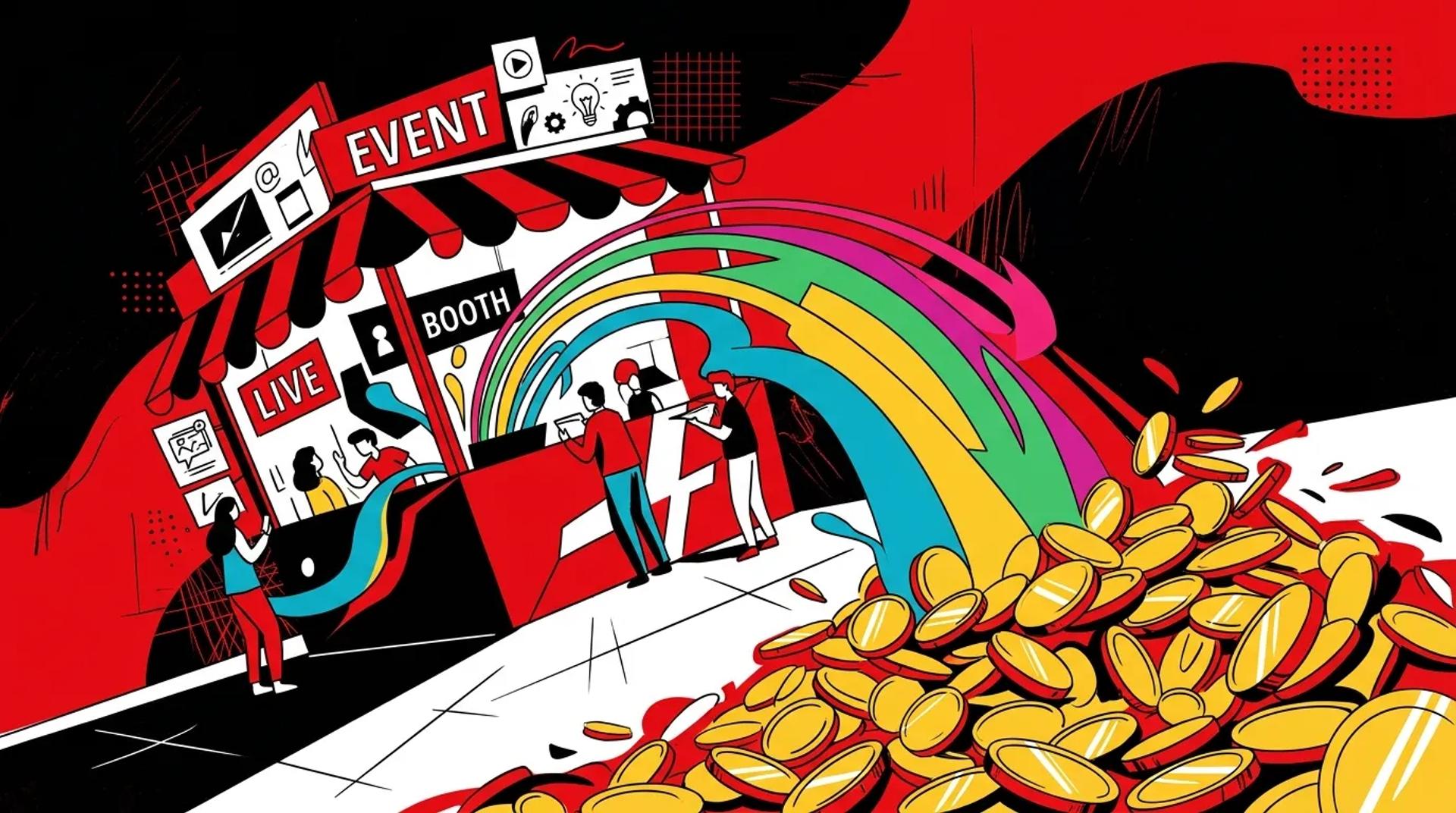

Live events are expensive. Between booth design, staffing, travel, sponsorship fees, and production, a single activation can run $25,000 to $150,000+. If all you walk away with is a stack of business cards and a few handshakes, your event marketing ROI is terrible. The brands that win at events are the ones that turn a 3-day activation into 90 days of multi-channel content and pipeline.
Understanding how to capture leads at events is only half the equation. The other half is capturing content, data, and assets that fuel your marketing for months after the booth comes down. We have seen clients generate 40-50 pieces of usable content from a single event when they plan correctly. Most teams walk away with a dozen phone photos and a vague recap email.
This guide covers the full playbook for extending your live event investment across paid media, social, web, email, and sales.
The event content multiplier framework
Most event marketing teams focus 95% of their energy on the live experience and 5% on what happens after. Flip that ratio closer to 50/50 and your ROI changes dramatically.
Here is what a well-planned activation should produce beyond the live experience:
- Video content: Speaker clips, attendee testimonials, product demos, behind-the-scenes footage
- Photography: Booth shots, crowd shots, product-in-use images, team/culture photos
- Lead data: Scanned badges, form fills, QR code entries, survey responses
- Social proof: User-generated content, social mentions, live reactions
- Sales assets: Recorded demos, competitive intel from conversations, FAQ ammunition
| Content Type | Pieces Per Event | Channels Served | Shelf Life |
|---|---|---|---|
| Video clips (15-60s) | 10-15 | Social, Web, Email, Ads | 3-6 months |
| Photos (edited) | 20-40 | Social, Web, PR, Sales | 6-12 months |
| Testimonial quotes | 5-10 | Web, Email, Ads, Case Studies | 12+ months |
| Lead data | 50-500+ | CRM, Email, Sales Outreach | Immediate |
| UGC / social mentions | 10-30 | Social, Ads (with permission) | 1-3 months |
How to capture leads at events (the right way)
Knowing how to capture leads at events goes well beyond scanning badges. Badge scans give you a name, title, and email. They do not give you intent, timing, or fit. Here is what a proper lead capture system looks like:
Tiered capture strategy
- Passive capture (badge scans): Everyone who visits the booth. Low intent but builds your retargeting audiences.
- Active capture (forms/tablets): Attendees who engage with a demo or conversation. Capture their specific interest, timeline, and budget range.
- High-intent capture (booked meetings): On-site meeting scheduling with a calendar link. These go straight to sales as hot leads.
Real-time CRM sync
Do not wait until you get back to the office to upload leads. Sync captured data to your CRM in real time so your sales team can follow up within 24 hours. Speed-to-lead matters more at events than almost any other channel because your competitors are capturing the same people.
Post-event nurture sequences
Every lead tier gets a different follow-up sequence. Badge scans get a nurture drip. Active captures get a personalized follow-up referencing their specific interest. Booked meetings get a confirmation and prep materials. We typically see 3-5x higher conversion rates when follow-up is tiered this way.
Turning event content into paid media assets
The content you capture at events makes some of the best performing ad creative you will ever run. Testimonial clips, product demos, and crowd energy shots feel authentic because they are.
What works best in paid channels:
- Testimonial clips (15-30s) with captions perform exceptionally well on Meta and LinkedIn. Real people saying real things outperforms polished studio content in most B2B contexts.
- Demo highlight reels (30-60s) drive qualified traffic when run as YouTube pre-roll or LinkedIn sponsored video.
- Event recap montages (60-90s) work well for retargeting audiences who engaged with your event content organically.
- Behind-the-scenes clips (under 15s) drive strong engagement on TikTok and Reels as top-of-funnel awareness content.
Measuring event marketing ROI beyond lead count
Lead count is a vanity metric if you are not tracking what happens after the event. Here is the measurement framework we use:
- Pipeline generated: Total dollar value of opportunities created from event leads within 90 days
- Cost per qualified opportunity: Total event spend divided by the number of sales-qualified opportunities
- Content asset utilization: How many of the captured content pieces are actively running in campaigns 30, 60, and 90 days post-event
- Influenced revenue: Closed deals where the event was a touchpoint in the buyer journey, even if it was not the first or last touch
- Audience growth: Net new contacts, social followers, and retargeting audience size gained from the event
The live event activation strategy that works is one where you can point to specific revenue outcomes, not just booth traffic numbers.
Frequently asked questions
How far in advance should I plan the content capture for an event?
Minimum 4-6 weeks before the event. You need a content shot list, a capture team briefed on what to get, equipment tested, and a post-event editing timeline mapped out. We have seen teams show up to events with zero content plan and come home with nothing usable.
What is the most important thing to capture at an event for ROI purposes?
Customer and prospect testimonials on video. Nothing else comes close in terms of versatility and performance across channels. A 60-second testimonial can be cut into social clips, ad creative, website content, and sales enablement material. Get as many as you can.
How do I justify the cost of a professional content capture crew at my event?
Compare the cost of the capture crew ($3,000-$8,000) to what you would spend producing equivalent content in a studio or on a separate shoot day. Event content is cheaper to produce, more authentic, and serves more channels. The math works every time.
How soon after the event should content go live?
Social content should start going live during the event. Recap videos within 1 week. Ad creative within 2 weeks. The longer you wait, the less relevant the content feels and the colder your leads get.
Stop treating events as one-day expenses
Your next event should not be a cost center. It should be a content factory and a pipeline machine. Talk to a Live Event Producer at Ad Leverage and we will build an activation plan that captures leads, content, and revenue from a single event.
References
- HubSpot: The Ultimate Guide to Event Marketing
- Bizzabo: Event Marketing Benchmarks and Trends Report
- CEIR (Center for Exhibition Industry Research): Event Attendee Engagement Studies