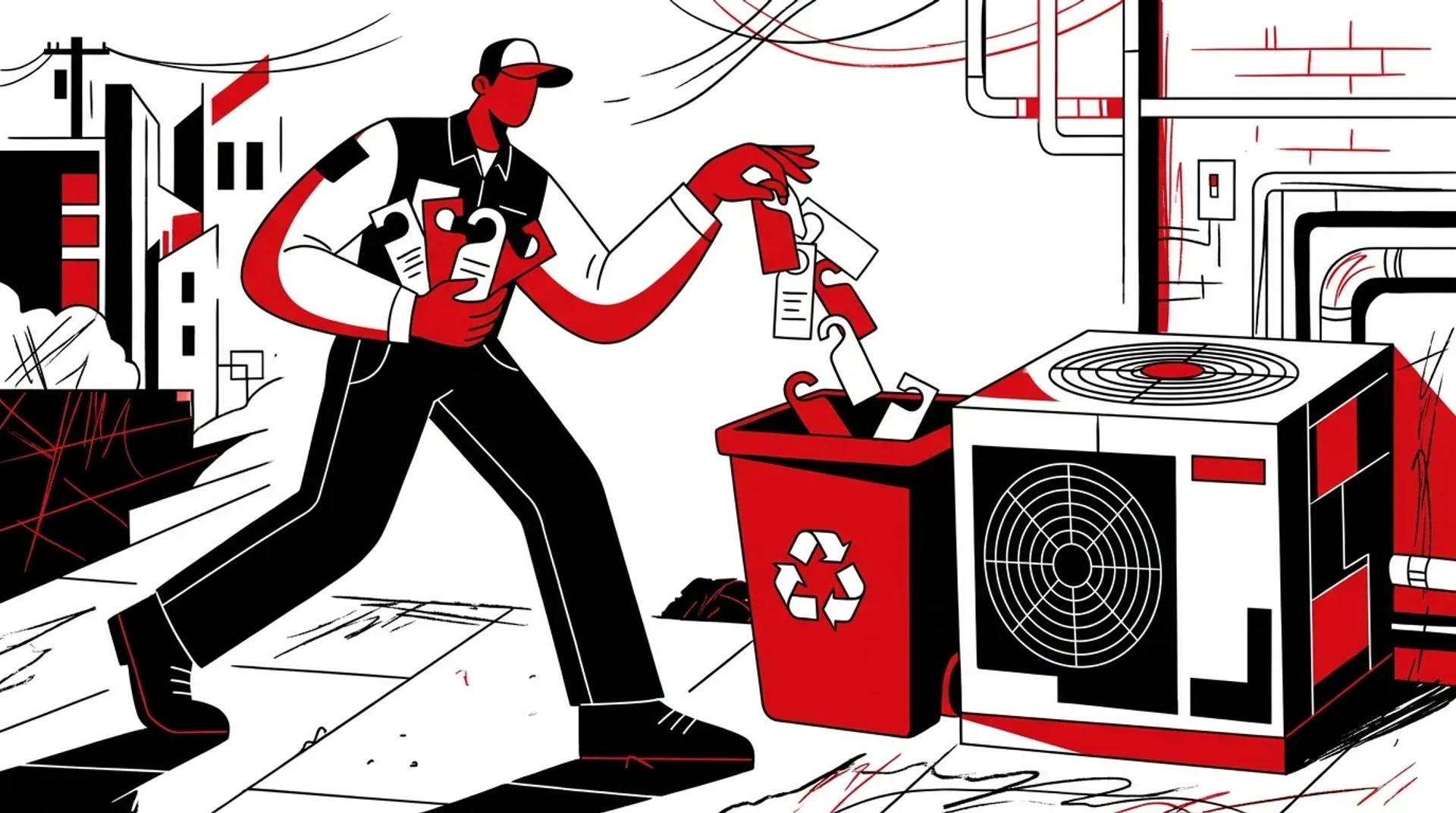

The most common mistake we see with heat pump creative this year is treating the end of the federal tax credit as a website fix. Someone deletes the 25C banner from the homepage in January, and the claim lives on in a search ad headline, a Performance Max image, a door hanger reorder, and the financing one-pager on every technician’s tablet.
That gap costs more than it looks. A homeowner who calls expecting money back from the IRS is a harder sale, and your CSR spends the first minutes of the call correcting your own marketing.
Good heat pump marketing in late 2026 starts with a full creative inventory, then a message reset. Below is how to find every asset that still carries the old claim, what to write instead, and how to design incentive copy so you never have to hunt for it again.
Key takeaways
- The date rule is simple. The 25C credit covers qualifying heat pumps installed by December 31, 2025. A 2026 install does not qualify.
- The claim hides in more places than your website. Ads, extensions, image assets, Google Business Profile posts, wraps, signs, door hangers, quote templates, and old blog posts all need a scan.
- Search for exact strings. “tax credit”, “25C”, “30%”, “$2,000”, and “net after credit” catch most of it.
- Lead with what still exists. State or utility rebates where they are real and confirmed, then financing, then comfort and operating cost.
- Demand did not fall off a cliff. ACHR News reports heat pump shipments kept climbing in 2026 after the credit expired, so the product sells without it.
The 25C date rule to put in every creative brief
The federal 25C credit applies only to qualifying heat pumps installed by December 31, 2025. A heat pump installed in 2026 does not qualify, no matter when it was quoted, sold, or financed.
The IRS page for the Energy Efficient Home Improvement Credit says the credit can be claimed for improvements made through December 31, 2025. The statute language is framed around property “placed in service” by that date, which in practical terms means installed and operating. Rewiring America states it plainly: heat pump purchases or installations completed after December 31, 2025 are not eligible.
Write that rule into the top of every brief your team or vendors touch. It stops a well-meaning designer from reviving a 2024 template because it “tested well.”
What 2025 customers can still claim
Customers who had a qualifying heat pump installed in 2025 can still claim it when they file for that tax year. The IRS home energy tax credits page lists the rate for 2023 through 2025 as 30 percent, with heat pumps carrying a separate annual limit of $2,000 inside an overall credit of up to $3,200.
One detail matters for any 2025 customer calling with questions: the IRS says property acquired and installed in 2025 must come from a qualified manufacturer. Point them to the IRS and their tax preparer. Your team should not be giving tax advice.
Water heaters, geothermal, and the deduction confusion
If your heat pump water heater ads referenced a federal credit, they were referencing the same 25C credit, so treat them the same way. Geothermal systems sat under a different credit (25D), which the IRS lists at 30 percent for 2022 through 2025. Confirm its current status on the IRS site before any geothermal ad mentions it.
Also watch your wording on anything still live about past installs. Some consumer finance pages still describe the heat pump credit as a “deduction” expiring in 2026. It was a credit, not a deduction, and it ended for installs after 2025.
Pro tip: Give your CSRs one approved sentence: “The federal heat pump credit ended for systems installed after 2025, but we’ll check what local rebates and financing you qualify for on the first visit.” Consistency on the phone protects trust.
Where the old tax credit claim still hides: an asset checklist
The old claim survives in every asset that was built once and never revisited. Most of it sits outside your website, in paid media, print, sales collateral, and design templates.
Start with these exact search strings, because they catch the vast majority of outdated copy:
- “tax credit” and “credit”. Catches the obvious headline and body copy.
- “25C” and “IRA”. Catches technical references and “Inflation Reduction Act” language.
- “30%”. Catches discount-style framing that never named the credit.
- “$2,000” and “$3,200”. Catches dollar callouts in headlines, images, and scripts.
- “net after credit” and “after incentives”. Catches quote templates and financing math.
Then work through each asset type:
- Search ad headlines and descriptions. Check every responsive search ad, including paused ad groups that someone might re-enable in a cold snap.
- Extensions and assets. Callouts, sitelinks, structured snippets, and promotion assets often carry “Tax credit eligible” long after the ads were fixed.
- Performance Max image and video assets. Text baked into images is invisible to a text search, so review these by eye.
- Google Business Profile posts and offers. Old offer posts can keep surfacing in your profile. Archive or edit them.
- Social posts and boosted content. Pinned posts and evergreen ad creative on Meta are frequent offenders.
- Vehicle wraps and yard signs. These are the most expensive to fix, so log them and schedule replacement rather than ignoring them.
- Door hangers, flyers, and direct mail. Check print vendor reorder files, not just what is on the shelf.
- Financing one-pagers and proposal templates. Any “net after credit” figure needs to go, because it inflates the price gap the moment a customer does the math.
- Email and SMS follow-up sequences. Unsold estimate nurtures written in 2025 often promise the credit. Our guide to turning summer AC quotes into fall heating jobs covers how to rebuild those sequences.
- Design templates. Canva, InDesign, and agency master files will quietly regenerate the old claim in every new piece.
- Old blog posts and landing pages. AI assistants and search engines still read and cite them, so these need rewriting, not just unpublishing.
- Radio and video scripts. Re-read any script still in rotation, including pre-roll on YouTube and streaming.
| Asset group | Where it hides | How to find it | Fix speed |
|---|---|---|---|
| Paid search | Headlines, descriptions, callouts, promotion assets | Bulk export and text search | Same day |
| PMax and display | Image and video assets with baked-in text | Visual review of every asset | 1 to 3 days |
| Profiles and social | GBP offers, pinned posts, boosted creative | Manual scroll of recent and pinned content | 1 to 3 days |
| Sales collateral | Proposals, quote templates, financing sheets | Search in your field software and shared drives | About a week |
| Print and vehicles | Wraps, yard signs, door hangers, mailers | Photo inventory plus vendor reorder files | Next print run |
| Website and blog | Service pages, FAQs, old incentive posts | Site search and a crawl for each term | About a week |
How to run the heat pump creative audit in one week
A focused audit takes about a week for most single-location HVAC companies if one person owns it. The order matters: fix what is costing you calls today before fixing what costs you money to reprint.
- Export every text source. Pull bulk exports of your ad accounts, your proposal and quote templates, email and SMS sequences, and a crawl of your website.
- Run the search strings. Search each export for the terms above and log every hit in one sheet with the asset name, location, and owner.
- Review image and print assets by eye. Open every PMax image, social graphic, and print file. Text inside images will not show up in a search.
- Tag each hit by fix type. Use four tags: pause now, rewrite, archive, or reprint at next run.
- Fix paid media first. Ads are where a homeowner forms the expectation before they call, so these go live with new copy before anything else.
- Rewrite the website, blog, and sales templates. Update service pages and quote templates, and rewrite old incentive posts in past tense with a clear date.
- Schedule print and vehicle replacements. Swap door hangers and signs at the next print run, and plan wrap updates around normal fleet maintenance.
When the sheet is done, keep it. It becomes your incentive asset register for the next program change.
Before and after: heat pump ad copy rewrites
The best rewrites replace a dollar promise you can no longer make with a reason to call that is still true. Keep the urgency and the specificity, and drop the federal claim.
| Before (outdated) | After (accurate now) |
|---|---|
| Get $2,000 back with the federal tax credit | Heat pump financing available |
| Heat pumps 30% off with 25C | Quiet, even heat all winter long |
| Your net price after credit: see quote | Your price, plus any local rebate we can help you apply for |
| Hurry, the tax credit expires soon | Fall install dates open now |
| Did you know a federal tax credit could cover up to $2,000 of your heat pump? | Did you know your utility may offer a heat pump rebate? We check for you on the first visit. |
| How to claim the heat pump tax credit | The federal heat pump credit ended for installs after 2025. Here is what is available now. |
A few rules behind those pairs:
- Never use “net” pricing tied to an incentive you have not confirmed. It sets a number the customer will hold you to.
- Replace the deadline, do not delete it. Seasonal install capacity is a real and honest reason to act.
- Write past tense for anything historical. Old blog posts should say the credit ended and when, so readers and AI assistants get the right answer.
- Keep the benefit concrete. “Quiet” and “even heat” are things a homeowner can picture.
If the rewrites feel flat, the problem is usually that the old copy leaned on the incentive to do all the persuading. Our breakdown of the copywriting mistakes that quietly hurt conversion covers how to rebuild benefit-led copy.
Pro tip: Run the new headlines alongside your existing non-incentive headlines for a few weeks before judging them. Compare booked jobs, not clicks, because incentive headlines often drew curious clicks that never booked.
The new message order: rebates, financing, then comfort and cost
Lead with confirmed state or utility rebates where they exist, then financing, then comfort and operating cost. Where no rebate exists in your market, start with financing and comfort and skip incentives entirely.
Why you can lead without the federal credit
The evidence says homeowners are still buying. ACHR News reported in September 2026 that heat pump shipments continued to climb in 2026, even after the federal consumer credit expired. Lucas, an economist at the Energy Institute at Haas, looked at AHRI shipment data and put it simply: “There is no decrease.”
The same piece captured a contractor view many owners will recognize: “we don’t want to play tax advisor.” Dropping the credit from your pitch removes a source of confusion and callbacks.
1. Rebates, only where they are real
State and utility rebates are the new incentive layer, but availability changed repeatedly during 2026 and varies by state and utility. Before any rebate amount appears in an ad, confirm it on your state energy office site, your utility’s program page, or energy.gov.
This matters most for the federal Home Energy Rebates programs that states administer. Third-party trackers report different status by state and rule changes on fuel switching, so do not repeat a national rebate figure in local ads. If a program is open in your market, name the program, say “may qualify,” and date it.
2. Financing
Financing is the most reliable replacement for the credit because you control it. Frame it as a monthly number next to the comfort benefit, and keep the terms and approval language your lender requires.
3. Comfort and operating cost
Comfort claims are safe and persuasive: steady temperatures, quieter operation, and one system that heats and cools. Operating cost claims are powerful but need a source. Use EIA or DOE Energy Saver data rather than a manufacturer calculator, and avoid promising a specific savings number for a specific home.
Programs can also help fund the message itself. The MN ASHP Collaborative, for example, offers eligible contractors up to 50 percent matching reimbursement, up to $5,000, to promote heat pumps in their local markets, along with research-backed messaging guides. Check whether your state or utility runs something similar.
Design incentive information so it can be dated and updated
Treat incentive information as a swappable module with a date on it, never as copy baked into permanent creative. That way the next program change is a one-panel edit, not a reprint.

Most of the cleanup pain this year came from incentive claims sitting inside wraps, sign artwork, and master templates. A design system with a dedicated incentive block fixes that. Our guide to building a repeatable graphic design system covers how to set up components like this.
- Keep incentives off permanent assets. Wraps, yard signs, and truck magnets should carry brand, service, and phone number only.
- Use one incentive block. Build a single component in your templates for rebates and financing so every flyer, social graphic, and landing page pulls the same copy.
- Date every incentive mention. A small “Incentives as of” line with month and year tells customers and your own team how fresh it is.
- Point print to a page you control. A QR code or short URL that leads to a current incentives page lets printed pieces stay accurate longer.
- Show a visible last-updated date online. Put it on your incentives and heat pump service pages, and add FAQ markup so search engines read the questions clearly.
- Assign an owner and a review date. Put a quarterly incentive review on the calendar, and add one any time a state or utility program announces a change.
Old blog posts deserve special attention. AI assistants often pull from older pages, so a 2024 post about claiming the heat pump credit can keep feeding wrong answers about your company. Rewrite those posts with a clear past-tense headline and a link to your current incentives page. Our post on getting your HVAC company recommended by ChatGPT walks through how to test what assistants are saying before you change anything.
Frequently asked questions
Is the heat pump tax credit still available in 2026?
No. The IRS says the Energy Efficient Home Improvement Credit applies to improvements made through December 31, 2025. A heat pump installed in 2026 does not qualify for the 25C credit, regardless of when it was quoted or purchased.
Will there be a heat pump tax credit in 2027?
No federal heat pump tax credit is listed by the IRS for future years. Do not advertise a possible future credit. If a new program is ever announced, wait for official IRS or DOE guidance before it appears in any creative.
Can a customer still claim 25C for a heat pump installed in 2025?
Yes, for the 2025 tax year, if the system qualified. The IRS lists 30 percent up to $2,000 for heat pumps, and property acquired and installed in 2025 must come from a qualified manufacturer. Send customers to the IRS site and their tax preparer rather than advising them yourself.
Are there any federal heat pump incentives left?
The main federal option is the Home Energy Rebates funding that states administer, and its availability varies by state and has changed during 2026. Check your state energy office and energy.gov for current status before mentioning it in marketing. Rules on which projects qualify, including fuel switching, should also be confirmed with the state program.
How do I market heat pumps without the tax credit?
Lead with confirmed local rebates where they exist, then financing, then comfort and operating cost backed by government data. Audit every ad, sign, template, and old blog post for outdated credit language first, so your new message is not contradicted by old creative.
How do I set my heat pump business apart from competitors?
Be the company that gets the incentive question right. Many competitors still run outdated credit claims, so accurate, dated incentive information, clear financing, and a CSR who can explain options calmly all build trust. Back it with real install photos and reviews that mention comfort and quiet operation.
How Ad Leverage helps rewrite heat pump creative after 25C
Ad Leverage works with HVAC companies to audit and rewrite the creative that sells high-ticket installs, from search ad headlines and PMax assets to door hangers, proposal templates, and follow-up sequences. The goal is copy that books jobs on its own merits instead of leaning on an incentive that no longer applies.
Our copywriting team can run the asset inventory with you, write replacement copy for each channel, and build the dated incentive module into your templates so the next program change is a quick update. If you would rather handle the audit in-house, the checklist and process above are a solid place to start.